
Waterproofing
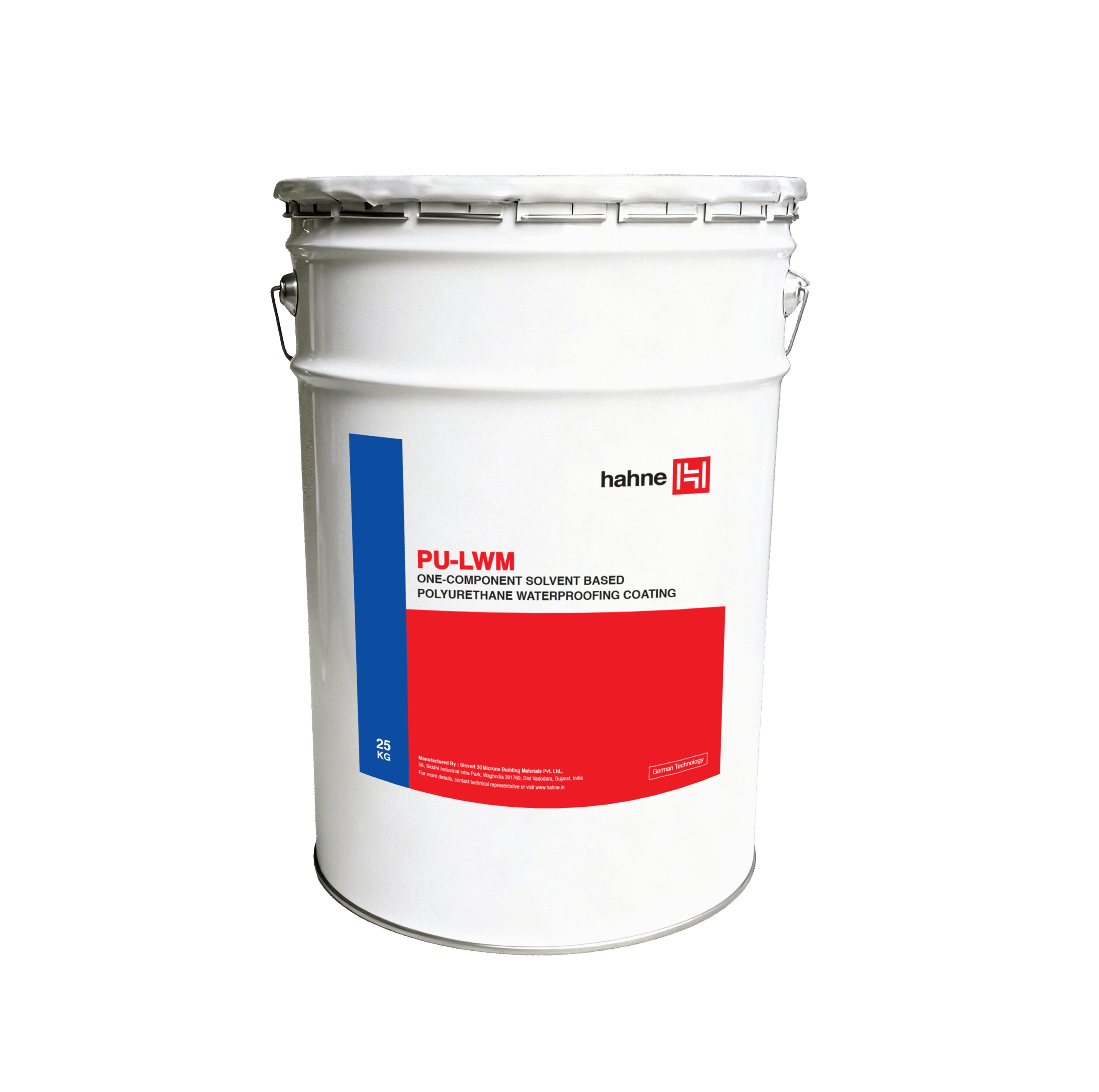
PU-LWM
PU-LWM
One-Component Solvent Based Polyurethane Waterproofing Coating
hahne PU-LWM is a single-component, solvent-based, high-tensile,moisture-cured modified polyurethane elastomeric liquid membrane designed for waterproofing applications. It is hydrophobic and highly elastic and, on application, reacts with atmospheric moisture to form a seamless, monolithic waterproofing membrane.
- Excellent waterproofing characteristics.
- High crack-bridging capability.
- Monolithic and seamless membrane.
- Excellent adhesion to concrete when applied over a suitable primer.
- Resistant to root growth.
- High durability and high elongation.
- Easy application by brush, roller or airless spray.
- Resistant to most mild acids and alkalis.
- Roofs, terraces and podiums.
- Terrace gardens.
- Concrete roof slabs and other suitable cementitious substrates.
- Waterproofing systems requiring a seamless, flexible polyurethane membrane.
| Property | Test Method | Result |
|---|---|---|
| Density | ASTM D 1475-2013 | 1.30 ± 0.5 g/cc |
| Non-Volatile Content (Solid Content) | ASTM D 6511-2018 | 85 ± 5 % |
| Tensile Strength | ASTM D 412-2016 | 2 ± 0.5 N/mm² |
| Elongation at Break | ASTM D 412-2016 | 500 ± 50 % |
| Tear Strength | ASTM D 624-2000 | > 10 N/mm |
| Crack Bridging Ability | EN 1062-7(A)-2004 | 3 mm |
| Puncture Resistance | ASTM E 154-2008 | > 30 N |
| Shore A Hardness | ASTM D 2240-2015 | > 65 |
| Pull-off Adhesion Strength to Concrete | ASTM D 7234-2022 | > 1.5 N/mm² |
| Average Adhesion in Peel after Water Immersion | ASTM C 794-2018 | > 10 N |
| Extensibility After Heat Ageing, Min – 6.4 mm | ASTM C 1522-2013 | Pass |
| Depth of Water Permeability @ 5 Bar | EN 12390-8-2019 | Nil |
| Water Absorption, 24 Hrs. | ASTM D 570-2022 | < 15 % |
| VOC Content | IS 101: Part 2, Sec 3: 2015 | < 50 g/Ltr. |
| Water Vapour Transmission Rate | ASTM D1653-2013 | 25 g/m²·Day |
| Dynamic Crack Bridging Ability @ -26°C | ASTM C 1305-2025 | Pass |
| Root Resistance | CEN-TS-14416-2014 | No Penetration |