
PU-XSEAL

Waterproofing

PU-XSEAL

PU-XSEAL

One-Component Hybrid Elastomeric Polyurethane Waterproofing Coating

A single-component hybrid polyurethane elastomeric waterproofing coating that cures to form a seamless, flexible and UV-resistant membrane. The coating offers excellent crack-bridging capability, high elongation and strong adhesion to concrete and metal substrates. It is primarily used for exposed roof waterproofing, terrace protection, refurbishment of old waterproofing systems and cool roof applications where long-term UV resistance and thermal stability are required.
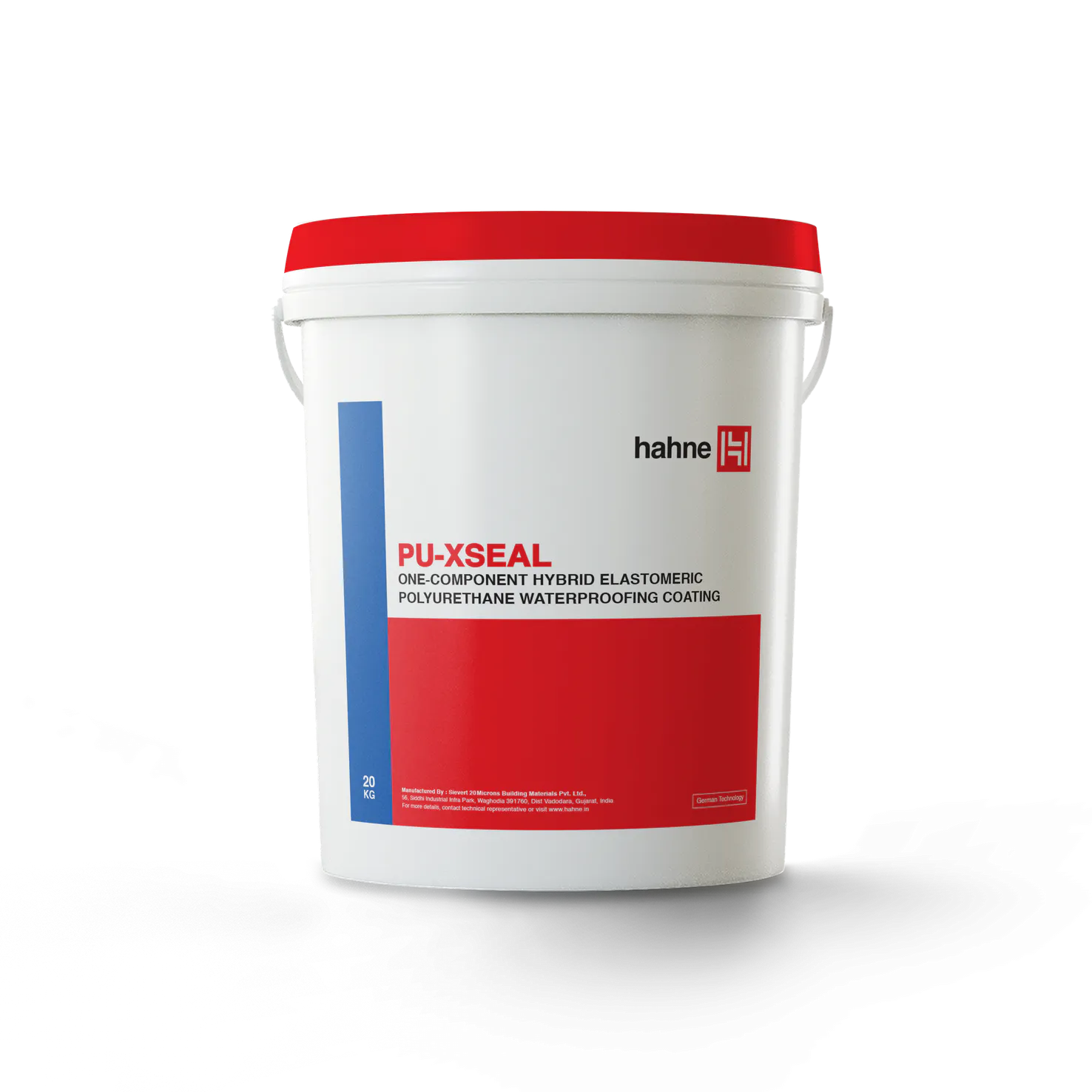
PU-XSEAL Waterproofing Coating

Features and Benefits


  • Seamless liquid-applied waterproofing membrane.
  • High elasticity and flexibility to accommodate substrate movement.
  • Good crack-sealing and crack-bridging capability.
  • Weather and UV resistant.
  • Suitable for exterior waterproofing applications.
  • Solvent-free and easy to apply.
  • Provides a durable, maintainable waterproofing surface.

Area of Applications


  • Exposed concrete slab roofs and other roof surfaces.
  • New and existing roofs and walls.
  • Car porch roofs and similar trafficable areas where the system design permits.
  • Fiber cement boards.
  • Metal surfaces.
  • Fire walls and other suitable exterior waterproofing applications.

Application


  • Stir hahne PU-XSEAL thoroughly before application to ensure a uniform and homogeneous material.
  • Apply hahne PU-XSEAL using a suitable brush or roller in two uniform coats, maintaining the recommended consumption for achieving the required dry film thickness.
  • Apply the first coat uniformly over the primed substrate, ensuring that the material is evenly distributed without excessive build-up, pinholes or missed areas.
  • Where reinforcement is specified as part of the waterproofing system, immediately embed the recommended non-woven polyester reinforcement into the first coat while the material is still wet. Use a suitable roller to ensure proper wetting of the reinforcement and to remove trapped air or wrinkles.
  • Allow the first coat to dry adequately before applying the second coat. The second coat should be applied uniformly and preferably in a direction perpendicular to the first coat to ensure consistent coverage.
  • Ensure that the required total dry film thickness is achieved after completion of the specified coats. Additional material may be required depending on substrate porosity, surface profile and site conditions.
  • Protect the freshly applied coating from rain, water, dust and other contamination until it has sufficiently dried.
  • Avoid application when the ambient or substrate temperature is below 5°C or above 35°C, and do not apply during foggy conditions.

Technical Specifications

Property Test Method Result
Density ASTM D 1475-2013 1.45 ± 5 g/cc
Non-Volatile Content (Solid Content) ASTM D 6511-2018 70-73 %
Tensile Strength ASTM D 412-2016 4 ± 0.4 N/mm²
Elongation at Break ASTM D 412-2016 > 600 %
Tear Strength ASTM D 624-2000 > 12 N/mm
Crack Bridging Ability EN 1062-7(A)-2004 > 4 mm
Puncture Resistance ASTM E 154-2008 > 50 N
Shore A Hardness ASTM D 2240-2015 > 60
Pull-off Adhesion Strength to Concrete ASTM D 7234-2022 > 1.5 N/mm²
Average Adhesion in Peel after Water Immersion ASTM C 794-2018 > 10 N
Depth of Water Permeability @ 5 Bar EN 12390-8-2019 Nil
Water Absorption, 24 Hrs. ASTM D 570-2022 < 10 %
VOC Content IS 101: Part 2, Sec 3: 2015 < 50 g/Ltr.
Water Vapour Transmission Rate ASTM D1653-2013 < 50 g/m²·Day
Dynamic Crack Bridging Ability @ -26°C ASTM C 1305-2025 Pass
Root Resistance CEN-TS-14416-2014 No Penetration